
Landscape, Life and Culture in the Araucanía
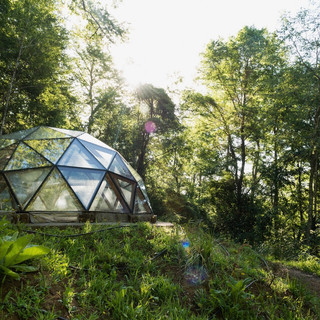

The forests, valleys and homegardens surrounding Lodge Kodkod have been the setting for a sustained programme of ecological and biocultural research over more than a decade. This work paints a rich and interconnected picture of how landscape change, biodiversity, and human culture interact in one of the world's most distinctive temperate forest ecosystems.
A landscape recovering against the odds
A foundational study by Petitpas, Ibarra, Miranda and Bonacic (2016) traced land-cover change across a 4,000-hectare Andean precordillera landscape near Pucón between 1983 and 2007. Where much of the Araucanía has experienced continuing forest loss, this study found the opposite: native vegetation increased by 375 hectares, the number of forest patches fell by 45%, and mean patch size more than doubled — together indicating a genuine reduction in fragmentation. The drivers were surprising: the growth of rural tourism and the influx of new residents seeking "natural" environments appear to have actively promoted forest recovery. This counter-trend offers an important lesson for conservation planning in the region.
Wildlife in a fragmented world
Against this backdrop of landscape change, two studies examine how the region's carnivores navigate altered habitats. Schüttler and colleagues (2017) radio-tracked the kodkod cat — the Americas' smallest wildcat and the lodge's namesake — in privately owned forest remnants. Despite being a forest specialist, the kodkod compensated for habitat loss by expanding its home range, making intensive use of forest edges near water, and tolerating human presence. The species selected elongated woodland patches, suggesting that maintaining habitat connectivity is more important than patch size alone.
A complementary study by Gálvez, Meniconi, Infante and Bonacic (2021) examined the broader mesocarnivore guild — including foxes, skunks, quiques and the kodkod — across gradients of land-use intensification. As agricultural pressure increased, native carnivores shifted toward nocturnality, reduced overlap with domestic dogs, and compressed their activity patterns in ways likely to affect fitness. Free-roaming dogs emerged as a critical and underappreciated threat to native wildlife coexistence.
Homegardens as living archives
Two studies shift the lens from wild landscapes to cultivated ones. Urra and Ibarra (2018) reviewed knowledge on family homegardens across Chile, documenting 125 cultivated plant species from 46 families, with at least 25 species in use since pre-Hispanic times. These intimate, family-managed spaces emerged as living repositories of agrobiodiversity and cultural memory — places where food sovereignty and traditional knowledge quietly persist.
Ibarra and colleagues (2021) deepened this inquiry by examining beetle functional diversity across 100 homegardens in the southern Andes. Gardens managed by campesino families hosted different beetle communities than those of recent migrants, with garden size, structural complexity and pest control strategy acting as social-ecological filters on species traits. Structurally complex homegardens fostered greater functional redundancy, suggesting they buffer agricultural ecosystems against environmental change.
Trees, memory and biocultural belonging
Finally, Ibarra and collaborators (2024) propose a relational framework for understanding the pewen (Araucaria araucana) forests of the southern Andes — neither purely ecological nor purely social, but fundamentally biocultural. Drawing on Mapuche knowledge and long-term research, they describe complex networks in which trees, seeds, wildlife and people co-constitute living memory. The pewen is not merely a species to be monitored; it is an actor in ongoing relationships that shape identity, territory and resilience.
Taken together, these six studies argue that the conservation of Araucanía's biodiversity cannot be separated from the cultural and social processes that shape the landscape — a conviction that has underpinned all the studies undertaken at Kodkod.
References
Gálvez, N., Paola Meniconi, José Infante, and Cristian Bonacic (2021). Response of mesocarnivores to anthropogenic landscape intensification: activity patterns and guild temporal interactions. Journal of Mammalogy, 102(4):1149–1164.
Ibarra. J.T., Cortés, J. , Petitpas, R., Barreau, A., Caviedes, J., Orrego, G., Riquelme-Maulén, W., y Altamirano, T. (2024). Volverse árbol, reconstruir la memoria: redes bioculturales en los bosques de pewen (Araucaria araucana) del sur de los Andes. Becoming tree, reconstructing memory: biocultural networks in pewen (Araucaria araucana) landscapes of the southern Andes. J Revista de Geografía Norte Grande, 88: 1-22.
Ibarra, J.T., Caviedes, J., Altamirano, T.A. et al. (2021). Social-ecological filters drive the functional diversity of beetles in homegardens of campesinos and migrants in the southern Andes. Sci Rep 11, 12462.
Petitpas, R., J.T. Ibarra, M. Miranda & C. Bonacic. 2016. Spatial patterns in a 24-year period show a case of increase native vegetation cover and decrease fragmentation in Andean temperate landscapes, Chile. Ciencia e Investigación Agraria 43(3): 385-396.
Schüttler E., Klenke R., Galuppo S., Castro R., Bonacic C., Laker J., Henle K.. Habitat use and sensitivity to fragmentation in America's smallest wildcat. Mammalian Biology. 2017;86(1):1-8. 15.
Urra, R., & Ibarra, J.T. (2021). Estado del conocimiento sobre huertas familiares en Chile: agrobiodiversidad y cultura en un mismo cultura. Revista Etnobiología. Vol 16, Num. 1. Abril 2018. pp: 31-46


Comentarios